Asli Ayurveda
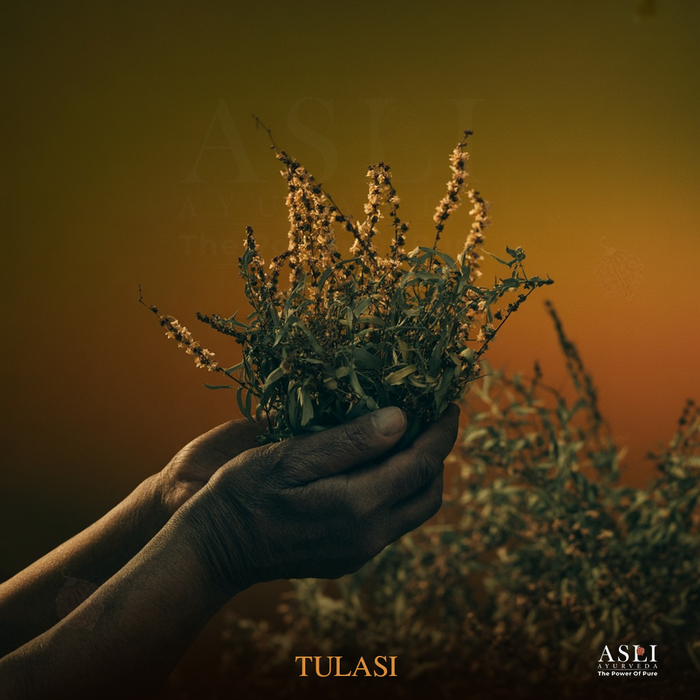
TULASI
TULASI
Couldn't load pickup availability
The Sacred Herb of Prana & Divine Vitality
Leaf / Panchanga | Traditionally Harvested & Naturally Dried
Ocimum sanctum (Ocimum tenuiflorum) | Lamiaceae
तुलसी • Tulasi • Holy Basil
|
Attribute |
Details |
|
Sanskrit Name |
तुलसी / तुलसीका (Tulasi / Tulasika) |
|
Botanical Name |
Ocimum sanctum (Ocimum tenuiflorum) |
|
Plant Family |
Lamiaceae |
|
Part Used |
Leaf & Panchanga (Whole Plant) — Dried |
|
Ayurvedic Category |
कफहर (Kaphahara) • दीपनीय (Deepaniya) • हृद्य (Hridya) • रसायन |
|
Taste (Rasa) |
Katu (Pungent) • Tikta (Bitter) |
|
Quality (Guna) |
Laghu (Light) • Ruksha (Dry) |
|
Potency (Virya) |
Ushna (Hot) |
|
Post-Digestive Effect |
Katu (Pungent) |
|
Dosha Action |
Kapha-Vata Shamaka |
|
Origin |
Sacred Courtyards & Herbal Farms Across Bharat — Traditionally Cultivated |
|
Shelf Life |
24 months from date of processing |
The Herb
No herb in Ayurveda carries the spiritual reverence, sacred symbolism, and daily intimacy of Tulasi.
Known as the “Queen of Herbs” and worshipped across Bharat for thousands of years, Tulasi is not merely a medicinal plant — it is considered a living embodiment of purity, devotion, and divine life force.
Ancient Ayurvedic physicians revered Tulasi wherever Kapha created congestion, heaviness, sluggishness, and respiratory imbalance, and where Vata weakened resilience through coldness and instability.
Its aromatic warmth, penetrating vitality, and uplifting intelligence made it one of Ayurveda’s foremost herbs for supporting breath, immunity, digestion, circulation, and energetic clarity.
Where stagnation clouded the channels, Tulasi was traditionally used to restore movement.
Where dullness weakened the mind, Tulasi awakened alertness.
Where heaviness burdened the chest and breath, Tulasi brought warmth and openness.
Yet beyond its wellness traditions, Tulasi holds an unparalleled spiritual role in Bharatiya culture.
The presence of Tulasi in a home has long symbolised sanctity, purity, and protection. Its leaves are offered in sacred rituals, consumed in morning wellness practices, and cherished as carriers of sattvic energy and Pranic vitality.
ASLI AYURVEDA offers Tulasi in its most authentic form — carefully harvested leaves and whole herb, naturally dried, and preserved without additives or artificial enhancement.
This is not merely Holy Basil.
This is Ayurveda’s philosophy of sacred vitality and awakened life force.
What the Ancient Texts Say
Charaka Samhita
तुलसी कटुका तिक्ता कफवातविनाशिनी ।
दीपनी हृद्या प्रोक्ता श्वासकासविनाशिनी ॥
Tulasī kaṭukā tiktā kaphavātavināśinī ।
Dīpanī hṛdyā prōktā śvāsakāsavināśinī ॥
“Tulasi is pungent and bitter, traditionally associated with balancing Kapha and Vata, supporting digestion, heart vitality, and respiratory wellness.”
हिंदी अर्थ:
“तुलसी को कटु और तिक्त माना गया है। यह वात-कफ संतुलन, पाचन, हृदय समर्थन तथा श्वास संतुलन में पारंपरिक रूप से उपयोगी मानी गई है।”
Charaka especially honours Tulasi for respiratory and metabolic wellness traditions.
Bhavaprakasha Nighantu
तुलसी हृद्या कफघ्नी दीपनी कुष्ठनाशिनी ।
श्वासकासहरा प्रोक्ता कृमिघ्नी विषनाशिनी ॥
Tulasī hṛdyā kaphaghnī dīpanī kuṣṭhanāśinī ।
Śvāsakāsaharā prōktā kṛmighnī viṣanāśinī ॥
“Tulasi is traditionally associated with Kapha balance, digestive activation, respiratory wellness, and purification.”
हिंदी अर्थ:
“तुलसी को कफ शमन, पाचन शक्ति, श्वास समर्थन तथा शुद्धिकरण में पारंपरिक रूप से उपयोगी माना गया है।”
The classical texts consistently describe Tulasi as a herb of vitality, purification, and sacred respiratory balance.
Ayurvedic Classical Understanding
Across Ayurvedic literature and traditional practice, Tulasi is associated with:
Respiratory wellness traditions
Kapha balance
Digestive activation
Pranic vitality
Immune resilience traditions
Mental clarity and alertness
Spiritual purity and sattvic living
Its enduring place within Ayurveda reflects the ancient understanding that true wellness begins with balanced breath and awakened consciousness.
Benefits
Ayurvedic Benefits
Revered as a classical Kaphahara & Rasayana herb traditionally associated with vitality and purification
Traditionally linked with balancing aggravated Kapha and Vata
Hridya — associated with supporting heart-centred wellness traditions
Traditionally referenced in respiratory and digestive Ayurvedic formulations
Associated with supporting warmth, circulation, and energetic movement
Traditionally valued during cold weather, dampness, and seasonal imbalance
Considered aromatic, uplifting, and Prana-supportive according to Ayurvedic understanding
Wellness Benefits
May support respiratory comfort and seasonal wellness routines
Traditionally associated with maintaining digestive warmth and clarity
May support active lifestyles and energetic vitality
Traditionally linked with emotional freshness and mental alertness
May support immune and resilience-focused wellness rituals
Traditionally associated with maintaining internal warmth and lightness
Ritual Wellness Benefits
Revered as one of Bharat’s most sacred herbs in Vedic and Ayurvedic traditions
Traditionally consumed during morning rituals and spiritual wellness practices
Supports Ayurveda’s philosophy that breath carries life force (Prana)
Historically valued in meditation, devotion, and sattvic living traditions
How to Use Your Tulasi
Tulasi Tea — The Classical Sacred Ritual
Simmer Tulasi leaves gently in water for 5–10 minutes.
Consume warm.
Traditionally used to support breath, warmth, and seasonal balance.
Traditional Powder Preparation
Freshly grind dried Tulasi leaves into a fine powder using a stone grinder or high-powered grinder.
Traditionally consumed with warm water, honey, or ghee according to constitutional suitability.
Classical Respiratory Blend
Tulasi has historically been combined with Shunthi, Pippali, Yashtimadhu, and Vasa in traditional Ayurvedic respiratory formulations.
Morning Prana Ritual
Warm Tulasi infusions have traditionally been consumed at sunrise to awaken clarity, freshness, and energetic balance.
Seasonal Wisdom
Monsoon (Varsha Ritu): Peak season for Tulasi due to aggravated Kapha and weakened immunity.
Winter (Hemanta Ritu): Traditionally valuable during coldness, congestion, and sluggishness.
Spring (Vasanta Ritu): Used to reduce accumulated Kapha and restore lightness.
Summer (Grishma Ritu): Used moderately according to constitution due to its heating potency.
Purity & Sourcing
ASLI AYURVEDA’s Tulasi is sourced from sacred herbal farms and traditionally cultivated ecosystems across Bharat, where mineral-rich soil, abundant sunlight, and natural cultivation practices produce intensely aromatic and phytochemically rich leaves of exceptional Ayurvedic quality.
The leaves and whole herb are carefully harvested, naturally dried, and preserved without chemical fumigation, synthetic flavouring, or artificial enhancement to maintain their authentic Ayurvedic integrity.
Processing takes place within our Z Gold Certified Greenroom Infrastructure — a spiritually aligned Ayurvedic wellness sanctum where Vedic chants resonate continuously, preserving the atmosphere and sanctity of classical herbal preparation.
No additives.
No preservatives.
No synthetic enhancement.
No compromise with authenticity.
What you receive is Tulasi in the same honest form revered for generations across Bharat — sacred, aromatic, and deeply traditional.
This is the Power of Pure.
Share